By Lanre Oloyede
The Senior Special Assistant to the President on Special Needs and Equal Opportunities, Hon. Mohammed Abba Isa, has emphasized that achieving a truly inclusive digital transformation in teaching must begin with accessibility by design.
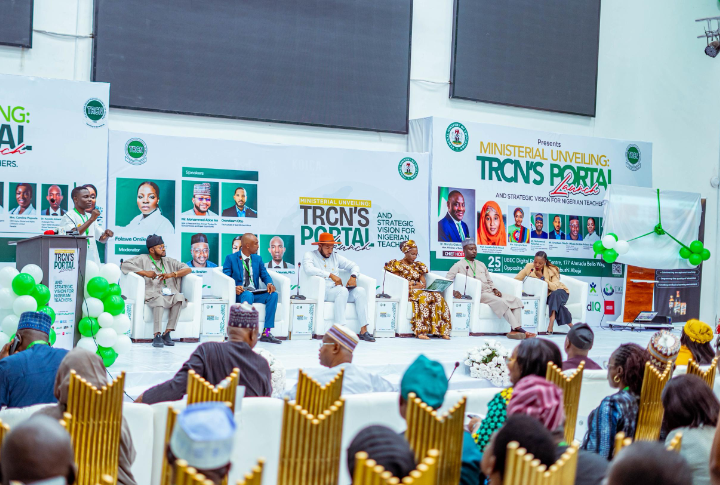
Speaking at the unveiling and national launch of the Digital Teacher Portal and the Teachers Registration Council (TRCN) Strategic Vision, officiated by the Hon. Minister of Education, Dr. Tunji Alausa, in Abuja, Hon. Abba Isa stressed that accessibility must be embedded at the foundation of every digital platform, educational resource, and technological tool deployed in Nigerian schools.

According to him, “Accessibility by design means creating digital systems that are inclusive from the onset—ensuring that learners with diverse needs, including those with disabilities, can benefit equally.”
To achieve this, he outlined five key areas:
- Policy Enforcement: Full implementation of the Discrimination Against Persons with Disabilities (Prohibition) Act, 2018, which mandates accessibility in public services, including education.
- Accessible Digital Infrastructure: Learning platforms must incorporate features such as screen readers, captioning, sign language interpretation, adjustable fonts, and voice recognition.
- Inclusive Content Development: Digital learning materials should be available in multiple formats—Braille, audio, simplified text, and visual supports.
- Capacity Building for Educators: Teachers need training on digital accessibility standards and inclusive teaching methods that accommodate both mainstream and special needs students.
- Partnerships: Government, private sector, and civil society must collaborate to provide assistive technologies, subsidized devices, and internet access for learners with disabilities.

He further noted that digital transformation must not only prioritize speed and technological sophistication but also equity and inclusion, ensuring that no learner is left behind in Nigeria’s educational future.
Hon. Abba Isa added that empowering special needs teachers is central to this vision. “These teachers are not just educators; they are innovators, constantly adapting curricula and methodologies to meet the needs of diverse learners,” he said.
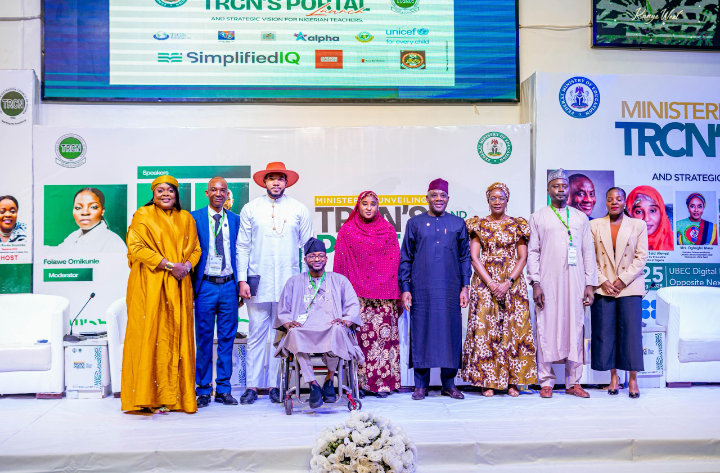
The Senior presidential aide commended the Teachers Registration Council of Nigeria and the Federal Ministry of Education, under the visionary leadership of the Honourable Minister of Education, for this bold and strategic initiative. According to him, this launch affirms the government’s commitment to digital transformation, teacher quality, and inclusive education.

He identified four critical focus areas for supporting teachers:
- Training and Professional Development: Continuous exposure to digital literacy, adaptive learning technologies, and inclusive teaching methodologies.
- Provision of Assistive and Adaptive Technologies: Access to interactive whiteboards, text-to-speech software, augmentative communication devices, and accessible learning management systems.
- Curriculum Flexibility: A national curriculum that allows modular adaptation to enable personalized, technology-enhanced learning.
- Communities of Practice: Establishing digital hubs or teacher support networks where special needs educators can exchange resources, lesson plans, and best practices.

“When we support teachers in these ways,” Abba Isa concluded, “we move beyond mere integration towards true inclusive education, where every learner’s potential is nurtured through personalized, technology-driven teaching.”
